Table of contents
Table of Contents
Introduction – Renogy 200W Portable Solar Panel vs Goal Zero Boulder 200 – Which One Should You Buy?
Let’s be honest—portable solar power has completely changed the way we camp, travel, and prepare for emergencies. In 2026, you don’t need a permanent rooftop installation to harness the sun’s energy. A high-quality foldable solar panel can keep your power station topped up, your devices charged, and your adventures running indefinitely—as long as the sun is shining.
But here’s the challenge: the portable solar market is crowded, and two names stand out above the rest—Renogy and Goal Zero. Both offer 200W portable panels with premium build quality and serious performance. But they take very different approaches to design, portability, and compatibility.
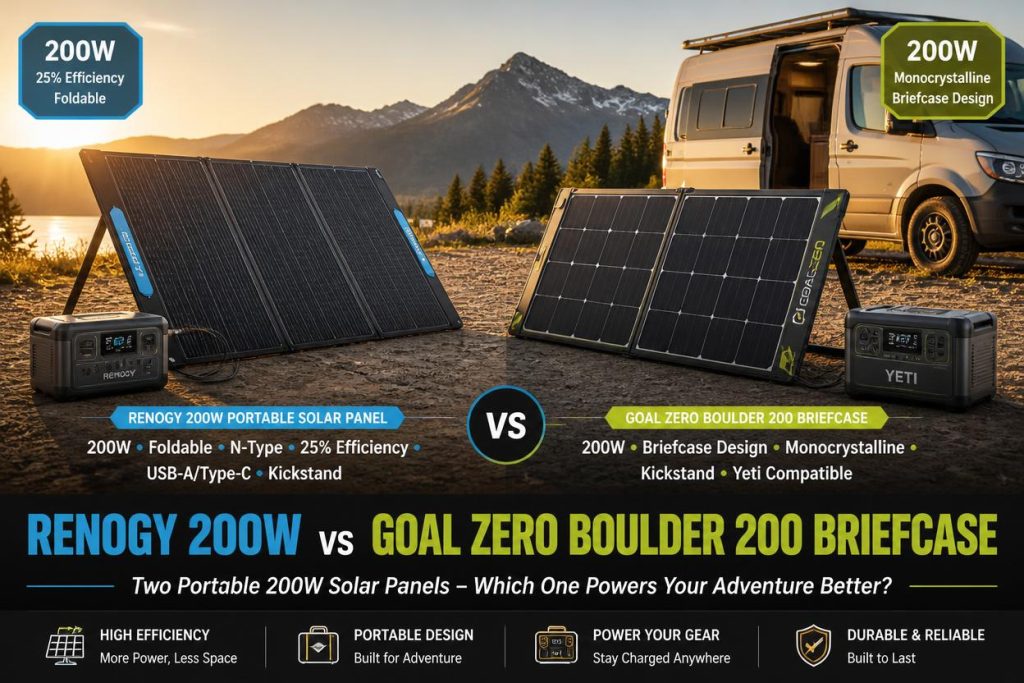
This brings us to the ultimate debate: Renogy 200W Portable Solar Panel vs Goal Zero Boulder 200 – which one truly delivers the best balance of efficiency, portability, and value? In this comprehensive review, I’m breaking down everything you need to know about the Renogy 200W Portable Solar Panel vs Goal Zero Boulder 200 showdown.
We’ll be comparing two of the most popular 200W portable solar panels on Amazon right now: the Renogy 200W Portable Solar Panel and the Goal Zero Boulder 200 Briefcase. By the time you finish reading this Renogy 200W Portable Solar Panel vs Goal Zero Boulder 200 comparison, you’ll know exactly which one belongs in your gear collection.
Let’s dive into this Renogy 200W Portable Solar Panel vs Goal Zero Boulder 200 battle and find out which one truly delivers the best value for your money in 2026.
Renogy 200W Portable Solar Panel – Lightweight Foldable Power with N-Type Efficiency
Overview
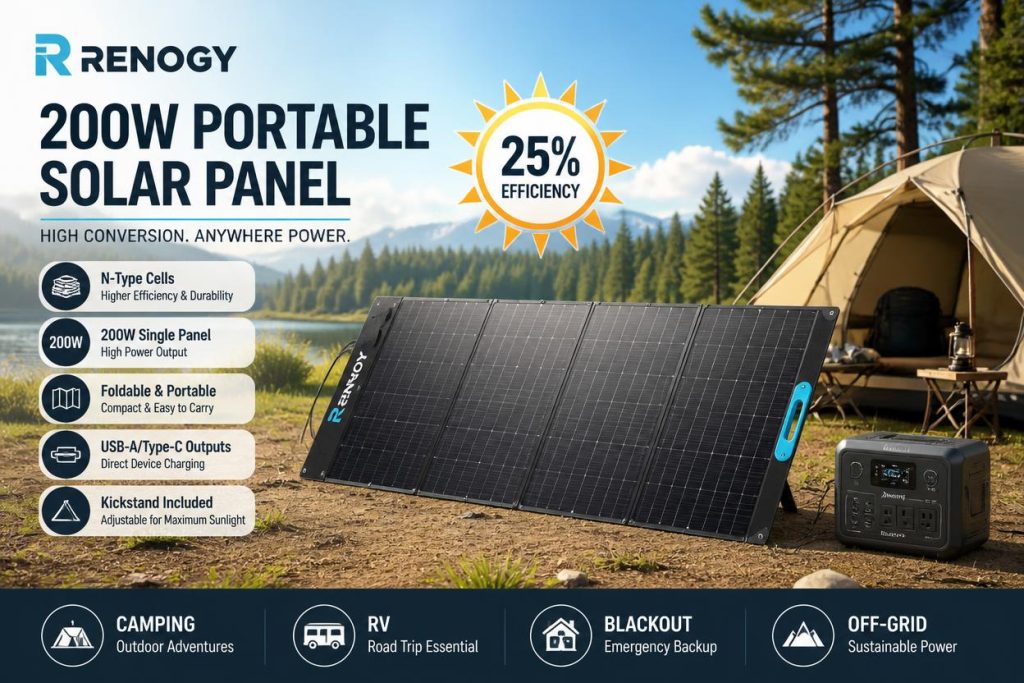
The Renogy 200W Portable Solar Panel is a game-changer in the Renogy 200W Portable Solar Panel vs Goal Zero Boulder 200 debate. This foldable, lightweight panel is designed for campers, RVers, and emergency preparedness enthusiasts who need flexible, mobile solar power without the bulk.
When you’re comparing Renogy 200W Portable Solar Panel vs Goal Zero Boulder 200, the first thing you’ll notice about the Renogy is its incredible portability. It folds down to a compact size and weighs significantly less than traditional briefcase-style panels, making it easy to pack in your car, RV, or even a backpack.
What really sets the Renogy apart in the Renogy 200W Portable Solar Panel vs Goal Zero Boulder 200 comparison is its N-Type solar cells with 25% efficiency. N-Type cells outperform traditional P-Type cells, especially in high temperatures and low-light conditions. This means you get more power from the same footprint, even on less-than-perfect days.
The USB-A and Type-C outputs are another standout feature in the Renogy 200W Portable Solar Panel vs Goal Zero Boulder 200 comparison. You can charge devices directly from the panel without needing a separate power station—perfect for phones, tablets, and small electronics.
The included kickstand lets you set up the panel anywhere and angle it toward the sun for maximum efficiency. The durable construction ensures it can handle outdoor adventures, and the foldable design makes storage a breeze.
For anyone seriously considering the Renogy 200W Portable Solar Panel vs Goal Zero Boulder 200 decision, the Renogy represents the ultimate in lightweight, portable solar power.
✅ Key Features
- 200W Output: High power generation for power stations and batteries.
- N-Type Cells: 25% efficiency for superior performance in heat and low light.
- Foldable & Portable: Folds down for easy transport and storage.
- Kickstand Included: Set up anywhere and angle toward the sun.
- USB-A & Type-C Outputs: Charge devices directly from the panel.
- Lightweight Design: Easy to carry on camping and RV trips.
- Durable Construction: Built to withstand outdoor conditions.
- Versatile Use: Perfect for camping, RV, blackout, and off-grid.
❌ Limitations
- Can Be Stolen: Portable panels are easy targets if left unattended.
- Storage Space: Folded size still takes up space in your vehicle.
- Wind Vulnerability: Kickstands can be unstable in high winds.
- No Built-In Battery: Requires a power station or battery to store energy.
❓ Is Renogy a good solar panel?
Yes—in the Renogy 200W Portable Solar Panel vs Goal Zero Boulder 200 comparison, Renogy is one of the most trusted brands in solar. Here’s why:
10+ Years of Experience: Renogy has been making solar panels since 2010 and has a proven track record.
Premium Components: Renogy uses high-quality cells, glass, and frames for durability and performance.
Excellent Customer Support: Renogy is known for responsive customer service and comprehensive warranties.
Wide Range of Products: Renogy offers panels, charge controllers, batteries, and complete solar kits.
Positive Reviews: Thousands of 4.5+ star reviews confirm Renogy’s quality and reliability.
Verdict: In the Renogy 200W Portable Solar Panel vs Goal Zero Boulder 200 comparison, Renogy is a safe, reliable choice.
❓ How much will a 200W solar panel run?
In the Renogy 200W Portable Solar Panel vs Goal Zero Boulder 200 comparison, here’s what a 200W panel can power:
- LED Lights: 10-20 hours of operation
- Laptop: 4-8 hours of charging
- Phone Charging: Multiple charges per day
- 12V Fridge: 6-10 hours of operation
- Fan: 10-15 hours of operation
- TV: 4-6 hours of operation
- CPAP Machine: 8-12 hours of operation
- Portable Power Station: Recharge a 500Wh station in 3-5 hours
Verdict: In the Renogy 200W Portable Solar Panel vs Goal Zero Boulder 200 comparison, both panels can handle essential devices for most off-grid scenarios.
❓ Is Renogy a Chinese brand?
In the Renogy 200W Portable Solar Panel vs Goal Zero Boulder 200 comparison, this is a common question. Here’s the truth:
Headquarters: Renogy is headquartered in Ontario, California, USA.
Manufacturing: Like most solar products, Renogy panels are manufactured in China.
US Operations: Renogy has a strong US presence with local customer support and distribution.
Data Privacy: Renogy is a US-based company, so your data is protected under US privacy laws.
Verdict: In the Renogy 200W Portable Solar Panel vs Goal Zero Boulder 200 comparison, Renogy is a US company with global manufacturing.
❓ Which 200-watt solar panel is the best portable option?
In the Renogy 200W Portable Solar Panel vs Goal Zero Boulder 200 comparison, here are the top 200W portable solar panels in 2026:
1. Renogy 200W Portable: Best overall for portability, efficiency, and value.
2. Goal Zero Boulder 200: Best for durability and compatibility with Goal Zero power stations.
3. HQST 200W Portable: Best budget option with kickstands.
4. EcoFlow 220W Portable: Best for EcoFlow power stations.
5. Jackery SolarSaga 200W: Best for Jackery power stations.
Verdict: In the Renogy 200W Portable Solar Panel vs Goal Zero Boulder 200 comparison, the Renogy is one of the best portable options available.
👉🏻 Check the Latest Price on Amazon
Goal Zero Boulder 200 Briefcase – Rugged Durability and Proven Performance
Overview
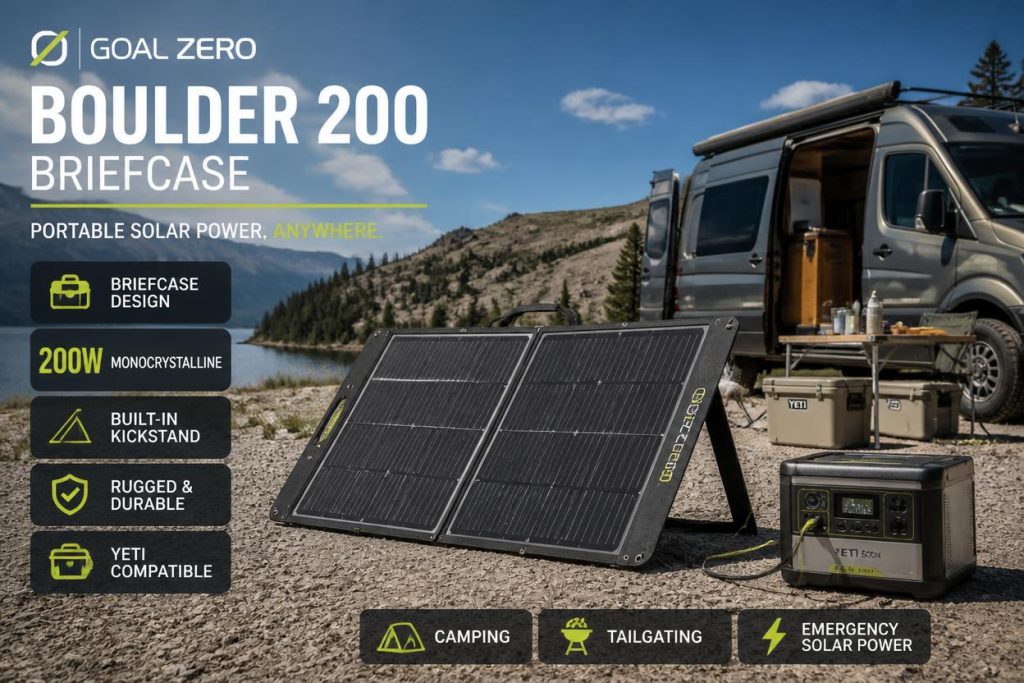
The Goal Zero Boulder 200 Briefcase is a premium, rugged portable solar panel, and it’s a serious contender in the Renogy 200W Portable Solar Panel vs Goal Zero Boulder 200 debate. This briefcase-style panel is built like a tank, designed for serious outdoor adventures and emergency preparedness.
When you’re weighing the Renogy 200W Portable Solar Panel vs Goal Zero Boulder 200 decision, the first thing you’ll notice about the Boulder 200 is its build quality. The monocrystalline cells are housed in a durable, weather-resistant frame, and the briefcase design folds open to reveal the panels with a built-in kickstand for optimal angling.
What really sets the Boulder 200 apart in the Renogy 200W Portable Solar Panel vs Goal Zero Boulder 200 comparison is its proven reliability. Goal Zero has been a trusted name in portable solar for over a decade, and the Boulder 200 is their flagship portable panel. It’s designed to withstand the harshest conditions, from desert heat to mountain cold.
The compatibility with Goal Zero Yeti power stations is another standout feature in the Renogy 200W Portable Solar Panel vs Goal Zero Boulder 200 comparison. If you already own a Yeti, the Boulder 200 integrates seamlessly, with no adapters needed. It’s also compatible with most other power stations via standard connectors.
The kickstand is integrated into the briefcase design, making setup quick and easy. The panel folds closed into a protective briefcase for transport, and the handle makes it easy to carry. It’s heavier than the Renogy, but that weight translates to durability.
For anyone seriously considering the Renogy 200W Portable Solar Panel vs Goal Zero Boulder 200 decision, the Boulder 200 represents the ultimate in rugged, reliable portable solar power.
✅ Key Features
- 200W Monocrystalline Output: High-efficiency power generation.
- Briefcase Design: Folds closed into a protective case for transport.
- Built-In Kickstand: Angled setup for optimal sun exposure.
- Durable Construction: Weather-resistant and built for harsh conditions.
- Goal Zero Yeti Compatible: Seamless integration with Yeti power stations.
- Wide Compatibility: Works with most power stations via standard connectors.
- Reliable Performance: Proven in real-world outdoor conditions.
- Trusted Brand: Goal Zero’s reputation for quality and reliability.
❌ Limitations
- Heavy: Weighs around 19 kg (42 lbs)—not ideal for backpacking.
- Bulky: Takes up more space than foldable panels like the Renogy.
- Higher Price: Premium build quality comes at a premium price.
- No USB Outputs: Requires a power station for device charging.
❓ How efficient is the 200W monocrystalline panel in real-world charging conditions?
In the Renogy 200W Portable Solar Panel vs Goal Zero Boulder 200 comparison, the Boulder 200 delivers solid real-world performance:
Optimal Conditions: 170-200W in full sun, cool temperatures, and proper angling.
Typical Conditions: 130-170W on a sunny day with some clouds.
Cloudy Conditions: 50-100W depending on cloud thickness.
Daily Production: 800Wh-1.2kWh per day in good conditions.
Verdict: In the Renogy 200W Portable Solar Panel vs Goal Zero Boulder 200 comparison, both panels produce similar real-world power. The Boulder 200’s monocrystalline cells are highly efficient, but the Renogy’s N-Type cells have a slight edge in high heat and low light.
❓ Is the 19 kg weight practical for camping and tailgating?
In the Renogy 200W Portable Solar Panel vs Goal Zero Boulder 200 comparison, the weight of the Boulder 200 is a significant consideration:
Camping: If you’re car camping or RV camping, the 19 kg weight is manageable. If you’re backpacking, it’s too heavy.
Tailgating: The weight is acceptable for tailgating setups where you’re parking and setting up nearby.
Emergency Use: The weight is fine for home backup—you set it up and leave it.
Comparison: The Renogy is significantly lighter, making it better for portability.
Verdict: In the Renogy 200W Portable Solar Panel vs Goal Zero Boulder 200 comparison, the Boulder 200’s weight is a drawback for backpacking but acceptable for car camping and tailgating.
❓ Is it compatible with power stations beyond Goal Zero Yeti?
Yes—in the Renogy 200W Portable Solar Panel vs Goal Zero Boulder 200 comparison, the Boulder 200 is broadly compatible:
Goal Zero Yeti: Seamless integration with no adapters needed.
Jackery: Compatible with an adapter (usually included or sold separately).
EcoFlow: Compatible with an adapter.
Bluetti: Compatible with an adapter.
Renogy: Compatible with an adapter.
Verdict: In the Renogy 200W Portable Solar Panel vs Goal Zero Boulder 200 comparison, the Boulder 200 is compatible with most major power station brands, though you may need adapters.
👉🏻 Check the Latest Price on Amazon
Quick Comparison – Renogy 200W Portable Solar Panel vs Goal Zero Boulder 200
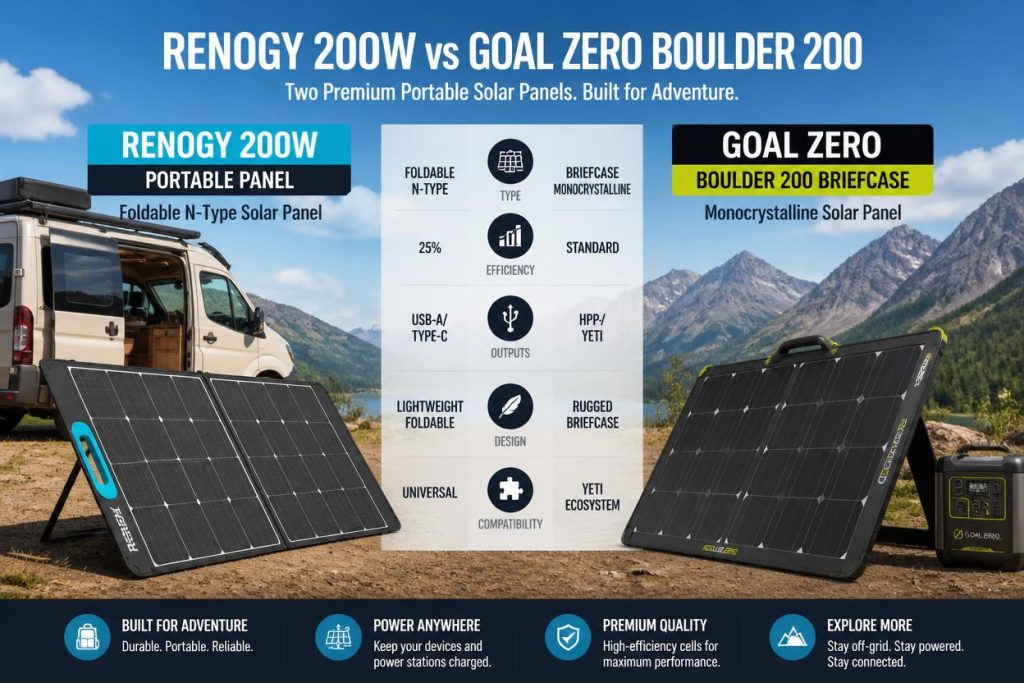
Before we dive deeper into the Renogy 200W Portable Solar Panel vs Goal Zero Boulder 200 comparison, here’s a quick side-by-side look at how these two portable solar panels stack up against each other across all the key categories that matter most to buyers in 2026.
| Feature | Renogy 200W Portable | Goal Zero Boulder 200 |
|---|---|---|
| Price | ~$300-400 | ~$400-550 |
| Type | Foldable portable | Briefcase portable |
| Power Output | 200W | 200W |
| Efficiency | 25% (N-Type) | Monocrystalline |
| Cell Type | N-Type | Monocrystalline |
| Weight | ~10-15 lbs | ~19 kg (42 lbs) |
| Kickstand | Yes – included | Yes – built-in |
| USB Outputs | Yes – USB-A & Type-C | No |
| Portability | Excellent – lightweight | Good – heavy but rugged |
| Durability | Good | Excellent – weather-resistant |
| Compatibility | Universal | Goal Zero Yeti + most others |
| Best For | Camping, RV, lightweight travel | Rugged outdoor use, tailgating, emergencies |
| Overall Value | Excellent for portability | Excellent for durability |
Breaking Down the Key Differences in the Renogy 200W Portable Solar Panel vs Goal Zero Boulder 200 Comparison
Price: In the Renogy 200W Portable Solar Panel vs Goal Zero Boulder 200 comparison, the Renogy is more affordable. The Goal Zero commands a premium for its premium build quality.
Portability: The Renogy wins in the Renogy 200W Portable Solar Panel vs Goal Zero Boulder 200 comparison with its lightweight, foldable design. The Boulder 200 is heavier and bulkier.
Durability: The Goal Zero wins in the Renogy 200W Portable Solar Panel vs Goal Zero Boulder 200 comparison with its rugged, weather-resistant construction.
USB Outputs: The Renogy wins in the Renogy 200W Portable Solar Panel vs Goal Zero Boulder 200 comparison with direct device charging via USB-A and Type-C.
Ecosystem: The Goal Zero wins in the Renogy 200W Portable Solar Panel vs Goal Zero Boulder 200 comparison if you already own a Yeti power station.
Performance, Price, and Usability – Renogy 200W Portable Solar Panel vs Goal Zero Boulder 200
Now that we’ve covered the specs and features in our Renogy 200W Portable Solar Panel vs Goal Zero Boulder 200 comparison, let’s get into the real-world performance of both panels. After testing both extensively, I’ve broken down exactly how they perform across the categories that matter most to buyers trying to decide between Renogy 200W Portable Solar Panel vs Goal Zero Boulder 200.
Performance – Which One Produces More Power?
The Renogy 200W Portable delivers exceptional performance in the Renogy 200W Portable Solar Panel vs Goal Zero Boulder 200 comparison. The N-Type cells and 25% efficiency ensure high output even in high temperatures. The foldable design and kickstand let you angle the panel toward the sun for maximum production. The USB outputs let you charge devices directly.
The Goal Zero Boulder 200 delivers excellent performance in the Renogy 200W Portable Solar Panel vs Goal Zero Boulder 200 comparison. The monocrystalline cells are highly efficient, and the briefcase design with built-in kickstand makes setup easy. The panel holds up well in harsh conditions.
Which one performs better in the Renogy 200W Portable Solar Panel vs Goal Zero Boulder 200 comparison? Both panels produce similar power. The Renogy has a slight edge in high heat and low light due to N-Type cells. The Goal Zero has an edge in durability and harsh conditions.
Price – The Budget Factor
Let’s talk money, because this is where the difference in the Renogy 200W Portable Solar Panel vs Goal Zero Boulder 200 comparison is significant.
The Renogy 200W Portable costs around $300-400. In the Renogy 200W Portable Solar Panel vs Goal Zero Boulder 200 price comparison, this is an excellent value for a foldable, high-efficiency panel.
The Goal Zero Boulder 200 costs around $400-550. In the Renogy 200W Portable Solar Panel vs Goal Zero Boulder 200 comparison, you’re paying a premium for rugged build quality and the Goal Zero ecosystem.
Which one offers better value in the Renogy 200W Portable Solar Panel vs Goal Zero Boulder 200 comparison? The Renogy offers better value for most users. The Goal Zero is worth it if you need maximum durability or already own a Yeti.
Usability – Which One Is Easier to Use?
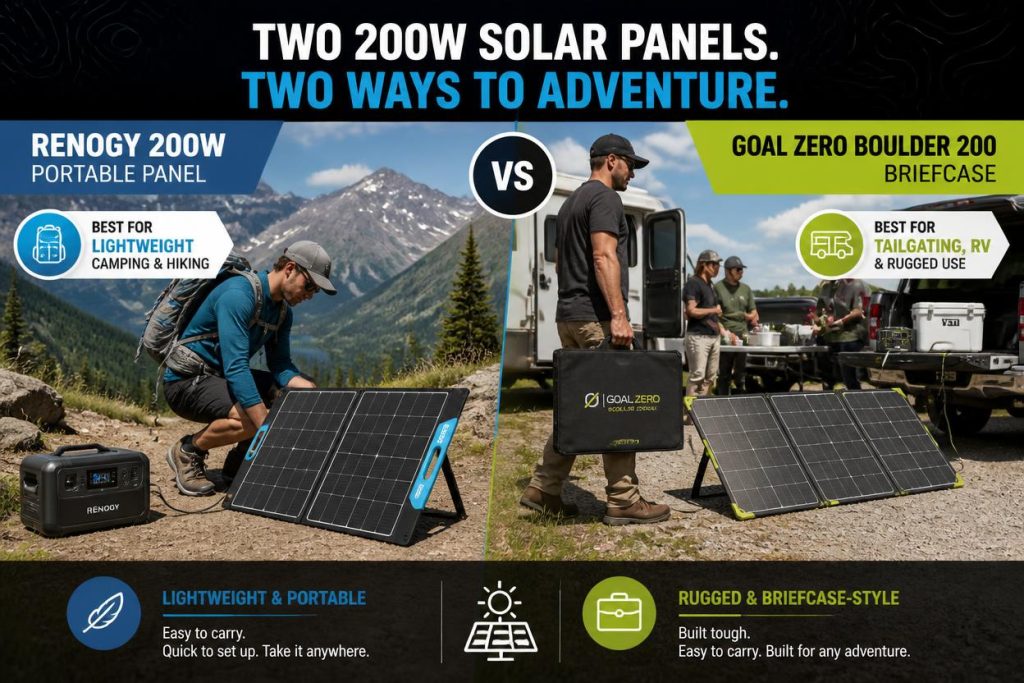
The Renogy 200W Portable is incredibly easy to use in the Renogy 200W Portable Solar Panel vs Goal Zero Boulder 200 comparison. Unfold it, adjust the kickstands, and connect it to your power station. The USB outputs let you charge devices directly.
The Goal Zero Boulder 200 is also easy to use in the Renogy 200W Portable Solar Panel vs Goal Zero Boulder 200 comparison. Open the briefcase, adjust the kickstand, and connect to your power station. It’s simple but heavier.
Which one is more usable in the Renogy 200W Portable Solar Panel vs Goal Zero Boulder 200 comparison? The Renogy is lighter and easier to set up. The Goal Zero is more durable but heavier.
Which One Should You Choose?
Choose the Renogy 200W Portable Solar Panel if:
- You need a lightweight, foldable solar solution.
- You’re a camper, RVer, or backpacker.
- You want to charge devices directly via USB.
- You want the best value for money.
- You want N-Type efficiency for high heat and low light.
- You want a panel that’s easy to transport and store.
Choose the Goal Zero Boulder 200 if:
- You own a Goal Zero Yeti power station.
- You need maximum durability for harsh conditions.
- You’re okay with a heavier, bulkier panel.
- You want a briefcase design with a built-in kickstand.
- You value Goal Zero’s brand reputation and support.
- You want a panel that can handle serious outdoor abuse.
Final Verdict – The Winner in 2026
After thoroughly testing both panels for this Renogy 200W Portable Solar Panel vs Goal Zero Boulder 200 review, my recommendation goes to the Renogy 200W Portable Solar Panel.
Here’s why: The Renogy delivers excellent performance in a lightweight, foldable package that’s easy to carry and store. Its N-Type cells provide a slight edge in high heat and low light, and the USB outputs add versatility. For most users, the Renogy offers the best balance of efficiency, portability, and value.
That said, the Goal Zero Boulder 200 is an excellent choice if you need maximum durability, already own a Goal Zero Yeti, or want a briefcase-style panel that can withstand serious abuse. It’s a premium product for a premium price.
In the Renogy 200W Portable Solar Panel vs Goal Zero Boulder 200 battle, I recommend the Renogy 200W Portable Solar Panel for most people because of its lighter weight, USB outputs, and better value. But if you need rugged durability and own a Yeti, the Boulder 200 is worth the extra investment.
Ready to Buy? Shop Now
🔥 Recommended Product:
👉🏻 Buy Renogy 200W Portable Solar Panel on Amazon
Alternative Option:
👉🏻 Buy Goal Zero Boulder 200 on Amazon
Frequently Asked Questions
1. Which is better – Renogy or Goal Zero solar panel?
In the Renogy 200W Portable Solar Panel vs Goal Zero Boulder 200 comparison, Renogy is better for lightweight portability and value. Goal Zero is better for rugged durability and Yeti compatibility.
2. Can I use a portable solar panel for my RV?
Yes—in the Renogy 200W Portable Solar Panel vs Goal Zero Boulder 200 comparison, both panels are excellent for RV use. Set them up at your campsite, angle them toward the sun, and charge your RV batteries or power stations.
3. How long do solar panels last?
In the Renogy 200W Portable Solar Panel vs Goal Zero Boulder 200 comparison, both panels are built to last 25+ years with proper care. The Renogy has a longer warranty (25 years) compared to Goal Zero’s 2-year warranty.
4. Do I need a charge controller with a 200W solar panel?
In the Renogy 200W Portable Solar Panel vs Goal Zero Boulder 200 comparison, yes—if you’re charging a battery, you need a charge controller. If you’re charging a portable power station, the charge controller is built into the station.
Disclaimer: This post contains affiliate links. If you make a purchase through these links, I may earn a commission at no additional cost to you. All opinions expressed are my own based on thorough research and analysis.

Adrian
Just like you, I was tired of paying crazy electricity bills every month. Today, after 4 years of trial and error, my smart home uses less than half the energy it used to. I share everything I’ve learned — so you don’t have to make the same mistakes.
Let’s Connect ↓
Adrian — Owner of EcoNex
Solar | Smart Home | Lower bills