Table of contents
Table of Contents
Introduction – Bamboo Cutting Board vs Plastic Board – Which One Should You Buy?
Let’s be honest—how many times have you stood in the kitchen, knife in hand, staring at your cutting board and wondering if you’re making the right choice? You want something that’s safe for your family, gentle on your knives, and durable enough to last. But with so many options out there, how do you know which one to trust?
Here’s the reality: The average home cook uses their cutting board multiple times a day, and the material you choose matters more than you think. Some materials harbor bacteria, dull your knives, or leach harmful chemicals into your food. Others are naturally antibacterial, knife-friendly, and built to last a lifetime.
This brings us to the ultimate debate: Bamboo Cutting Board vs Plastic Board – which one truly delivers the best balance of safety, durability, and value? In this comprehensive review, I’m breaking down everything you need to know about the Bamboo Cutting Board vs Plastic Board showdown.
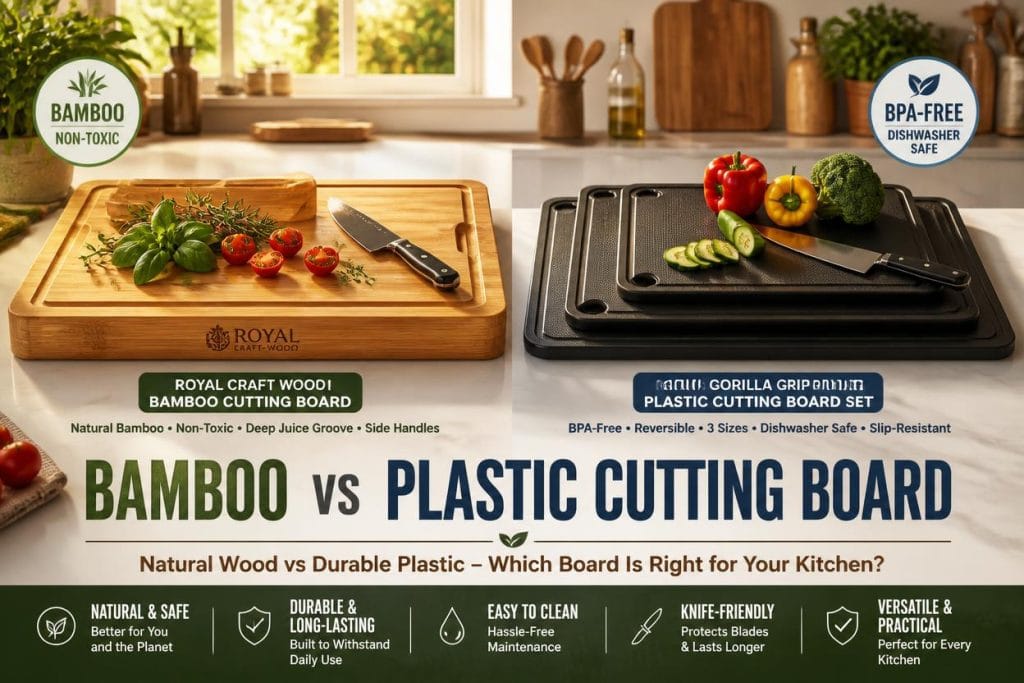
We’ll be comparing two of the most popular options on Amazon right now: the ROYAL CRAFT WOOD Bamboo Cutting Board Set and the GORILLA GRIP Plastic Cutting Board Set. By the time you finish reading this Bamboo Cutting Board vs Plastic Board comparison, you’ll know exactly which one belongs in your kitchen.
Let’s dive into this Bamboo Cutting Board vs Plastic Board battle and find out which one truly delivers the best value for your money in 2026.
ROYAL CRAFT WOOD Bamboo Cutting Board Set – Natural Beauty with Sustainable Design

Overview
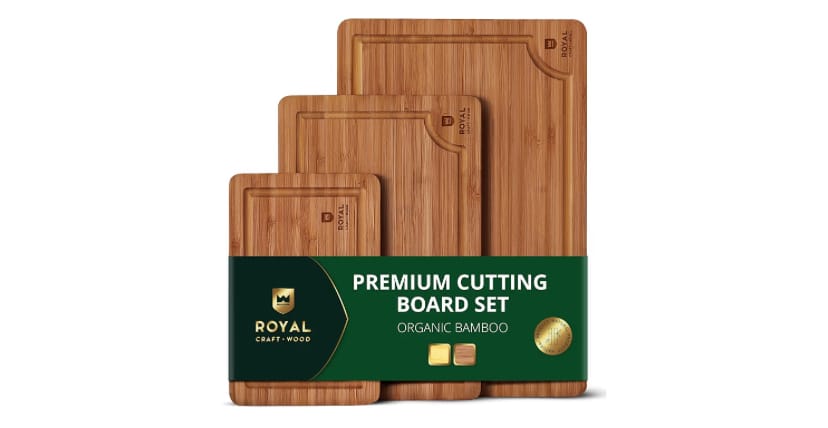
The ROYAL CRAFT WOOD Bamboo Cutting Board Set is a serious contender in the Bamboo Cutting Board vs Plastic Board debate. This beautifully crafted set brings the warmth and elegance of natural bamboo to your kitchen, along with exceptional durability and functionality.
When you’re comparing Bamboo Cutting Board vs Plastic Board, the first thing you’ll notice about the Royal Craft Wood set is its stunning natural appearance. The bamboo grain is beautiful and unique, making these boards perfect for both food prep and serving as charcuterie boards.
What really sets this set apart in the Bamboo Cutting Board vs Plastic Board comparison is its thoughtful design. The deep juice groove catches liquids and prevents them from spilling onto your counter. The side handles make it easy to carry and move around your kitchen. And the non-toxic, food-safe construction gives you peace of mind.
In the Bamboo Cutting Board vs Plastic Board battle, Royal Craft Wood represents the best of natural, sustainable kitchen tools.
✅ Key Features
- Natural Bamboo Construction: Sustainable, eco-friendly material that’s naturally antibacterial.
- Deep Juice Groove: Catches liquids and prevents countertop messes.
- Side Handles: Easy to carry, hang, and move around your kitchen.
- Non-Toxic & Food-Safe: No harmful chemicals or glues.
- Versatile Use: Perfect for chopping, meal prep, serving, and charcuterie boards.
- Multiple Sizes: Set includes various sizes for different kitchen tasks.
- Knife-Friendly Surface: Bamboo is gentle on knife blades.
- Beautiful Appearance: Natural grain that adds warmth to your kitchen.
❌ Limitations
- Not Dishwasher Safe: Bamboo can warp and crack in the dishwasher.
- Requires Maintenance: Needs regular oiling to prevent drying and cracking.
- Can Absorb Odors: Bamboo can absorb strong food smells over time.
- Less Sanitary for Raw Meat: Bamboo is more porous than plastic and can harbor bacteria in scratches.
❓ Is bamboo good for cutting boards?
Yes—in the Bamboo Cutting Board vs Plastic Board comparison, bamboo is an excellent choice for cutting boards. Here’s why:
Naturally Antibacterial: Bamboo has natural antibacterial properties that help inhibit bacterial growth.
Eco-Friendly: Bamboo is a highly sustainable resource that grows quickly and regenerates without replanting.
Knife-Friendly: Bamboo is gentle on knife blades, helping them stay sharper longer.
Beautiful Appearance: The natural grain of bamboo adds warmth and elegance to your kitchen.
Durable: When properly maintained, bamboo cutting boards can last for years.
❓ What are the disadvantages of bamboo cutting boards?
In the Bamboo Cutting Board vs Plastic Board comparison, bamboo does have some drawbacks:
Not Dishwasher Safe: Bamboo can warp, crack, or split in the dishwasher. You must hand wash and dry immediately.
Requires Maintenance: Bamboo boards need regular oiling to prevent drying, cracking, and warping.
Can Harbor Bacteria: While bamboo has natural antibacterial properties, it’s more porous than plastic and can harbor bacteria in deep scratches.
Can Absorb Odors: Bamboo can absorb strong food odors like garlic and onion over time.
May Dull Knives: Some lower-quality bamboo boards are harder than wood and can dull knives faster.
❓ How healthy is a bamboo cutting board?
In the Bamboo Cutting Board vs Plastic Board comparison, bamboo is a very healthy choice. Here’s why:
Natural Antibacterial Properties: Bamboo contains a natural antimicrobial agent called “bamboo kun” that helps inhibit bacterial growth.
No Harmful Chemicals: High-quality bamboo boards like Royal Craft Wood are made with food-safe glues and finishes, so no harmful chemicals leach into your food.
Knife-Friendly: Bamboo is gentle on knives, which means fewer metal particles in your food from knife wear.
Sustainable: Bamboo is one of the most sustainable materials available, making it a healthy choice for the planet too.
Key Consideration: In the Bamboo Cutting Board vs Plastic Board comparison, bamboo is healthier than plastic because it doesn’t leach microplastics or chemicals into your food.
❓ What is the healthiest cutting board material?
This is a common question in the Bamboo Cutting Board vs Plastic Board debate, and the answer depends on your priorities:
Bamboo: Naturally antibacterial, eco-friendly, and knife-friendly. Requires maintenance but is a sustainable, healthy choice.
Wood (Maple, Walnut): Naturally antibacterial, self-healing (knife marks close up), and long-lasting. Requires regular oiling.
Plastic: Non-porous, dishwasher-safe, and easy to clean. However, can develop deep scratches that harbor bacteria and may leach microplastics.
Glass or Stone: Non-porous and easy to clean, but dulls knives quickly and can chip or break.
For most home cooks in the Bamboo Cutting Board vs Plastic Board comparison, bamboo or wood is the healthiest choice due to their natural antibacterial properties and knife-friendliness.
👉🏻 Check the Latest Price on Amazon
GORILLA GRIP Plastic Cutting Board Set – Affordable, Durable, and Dishwasher Safe

Overview
The GORILLA GRIP BPA-Free Plastic Cutting Board Set is a serious competitor in the Bamboo Cutting Board vs Plastic Board debate. This practical, affordable set has become a favorite among home cooks for its durability, convenience, and ease of cleaning.
When you’re weighing the Bamboo Cutting Board vs Plastic Board decision, Gorilla Grip stands out for its thoughtful design. The boards are reversible, giving you two cutting surfaces in one. The slip-resistant border keeps the board securely in place while you chop, and the juice grooves catch liquids to prevent countertop messes.
What makes Gorilla Grip particularly appealing in the Bamboo Cutting Board vs Plastic Board comparison is its dishwasher safety. Unlike bamboo or wood boards that require hand washing, Gorilla Grip boards can be tossed in the dishwasher for effortless cleaning and sanitizing.
The set of 3 includes different sizes for various kitchen tasks. In the Bamboo Cutting Board vs Plastic Board comparison, this variety makes Gorilla Grip a versatile solution for most households.
✅ Key Features
- BPA-Free Plastic: Safe, non-toxic material that won’t leach chemicals into your food.
- Reversible Design: Two cutting surfaces in one board.
- Slip-Resistant Border: Keeps the board securely in place while cutting.
- Juice Grooves: Catches liquids and prevents countertop spills.
- Dishwasher Safe: Easy to clean and sanitize.
- Set of 3: Various sizes for different kitchen tasks.
- Non-Porous: Won’t absorb liquids, odors, or bacteria.
- US Designed: Thoughtful American design and quality.
❌ Limitations
- Shows Knife Marks: Plastic boards show visible knife marks over time.
- Less Knife-Friendly: Plastic can dull knives faster than bamboo or wood.
- Not Eco-Friendly: Made from plastic, not biodegradable.
- Can Harbor Bacteria: Deep scratches can trap bacteria that survive washing.
❓ What is the plastic board called?
In the Bamboo Cutting Board vs Plastic Board comparison, plastic cutting boards are typically referred to as:
Plastic Cutting Board: The general term for any cutting board made from plastic materials.
Polypropylene Board: The most common type of plastic cutting board, made from polypropylene (PP) plastic.
Polyethylene Board: Another common type, made from high-density polyethylene (HDPE).
Composite Board: Some boards combine plastic with other materials.
Gorilla Grip Board: This specific brand offers high-quality plastic boards with slip-resistant features.
❓ Is plastic chopping board safe?
This is a critical question in the Bamboo Cutting Board vs Plastic Board comparison. The answer is: it depends on the plastic:
Safe Plastic: BPA-free, food-grade polypropylene (PP) or polyethylene (PE) plastic boards are considered safe for food preparation.
Health Concerns: In the Bamboo Cutting Board vs Plastic Board comparison, there are concerns about plastic boards:
⚠️ Microplastics: Plastic boards can shed microplastic particles into your food, especially as they become scratched.
⚠️ Bacteria Trapping: Deep scratches in plastic boards can trap bacteria that survive washing.
⚠️ Chemical Concerns: Some plastics contain harmful chemicals like BPA, which can leach into food.
Recommendation: In the Bamboo Cutting Board vs Plastic Board comparison, choose BPA-free, food-grade plastic boards like Gorilla Grip, and replace them when they become deeply scratched.
❓ What is plastic board made of?
In the Bamboo Cutting Board vs Plastic Board comparison, plastic boards are typically made from:
Polypropylene (PP): A common food-grade plastic that’s lightweight, durable, and dishwasher safe.
Polyethylene (HDPE): High-density polyethylene is heavier, more durable, and more resistant to knife marks.
Polyethylene (LDPE): Low-density polyethylene is softer and more flexible.
Composite Materials: Some boards combine plastic with other materials like wood fiber for enhanced durability.
Gorilla Grip Boards: Made from high-quality, BPA-free food-grade plastic that’s designed for safe, durable food preparation.
❓ What is plastic cutting board material?
In the Bamboo Cutting Board vs Plastic Board comparison, the materials used include:
Polypropylene (PP): The most common material for affordable plastic cutting boards. Lightweight, dishwasher safe, and BPA-free when food-grade.
Polyethylene (HDPE): A premium material that’s more durable and resistant to knife marks. Often used in commercial kitchens.
PTFE (Teflon): A non-stick material that’s easy to clean but less common.
Glass-Filled Plastic: Some boards incorporate glass fibers for enhanced durability.
Key Difference: In the Bamboo Cutting Board vs Plastic Board comparison, food-grade plastic boards are safe, durable, and easy to clean. However, bamboo is a more sustainable and knife-friendly option.
👉🏻 Check the Latest Price on Amazon
Quick Comparison – Bamboo Cutting Board vs Plastic Board
Before we dive deeper into the Bamboo Cutting Board vs Plastic Board comparison, here’s a quick side-by-side look at how these two cutting boards stack up against each other across all the key categories that matter most to buyers in 2026.
| Feature | Royal Craft Wood Bamboo Board | Gorilla Grip Plastic Board |
|---|---|---|
| Price | ~$25-40 (Set of 3) | ~$20-30 (Set of 3) |
| Material | Natural bamboo | BPA-free plastic |
| Dishwasher Safe | No – hand wash only | Yes – dishwasher safe |
| Knife-Friendly | Yes – gentle on knives | Can dull knives over time |
| Antibacterial | Natural antibacterial properties | Non-porous but can trap bacteria in scratches |
| Maintenance | Requires regular oiling | Low maintenance – just wash |
| Durability | Long-lasting with proper care | Durable but shows knife marks |
| Eco-Friendly | Yes – sustainable bamboo | No – plastic material |
| Appearance | Natural, warm bamboo grain | Simple black plastic |
| Best For | Everyday chopping, serving, sustainability | Easy cleaning, raw meat, low maintenance |
| Overall Value | Excellent for quality and sustainability | Excellent for convenience and affordability |
Breaking Down the Key Differences in the Bamboo Cutting Board vs Plastic Board Comparison
Price: In the Bamboo Cutting Board vs Plastic Board comparison, Gorilla Grip is slightly more affordable than Royal Craft Wood. However, the price difference is small considering the long-term durability of bamboo.
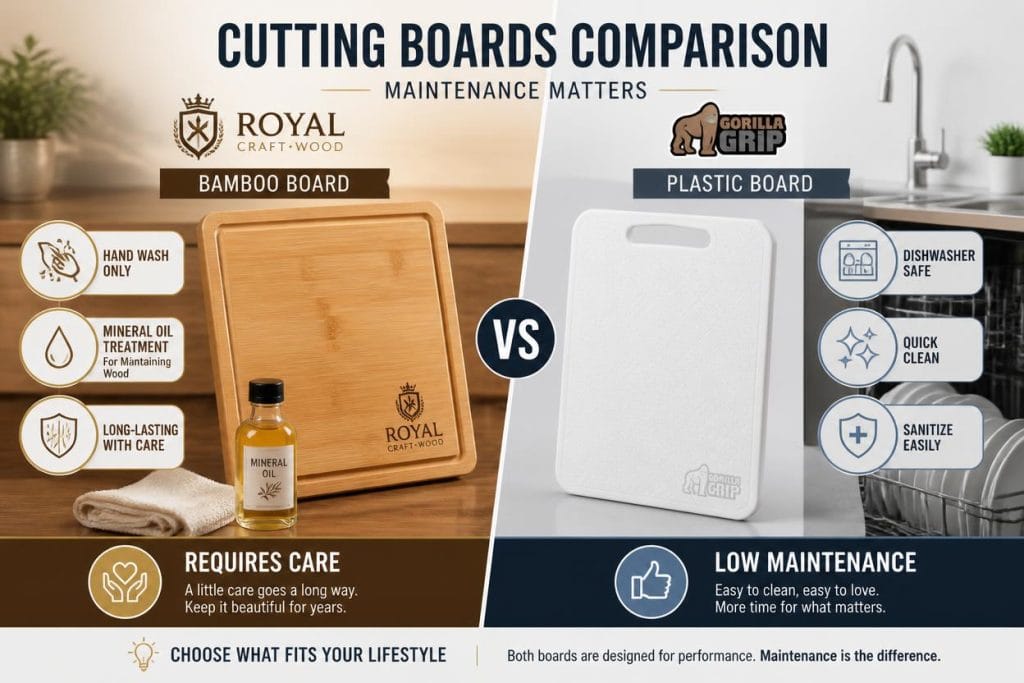
Maintenance: This is a major difference in the Bamboo Cutting Board vs Plastic Board comparison. Bamboo requires regular oiling and hand washing. Plastic is dishwasher safe and requires no maintenance.
Knife Friendliness: In the Bamboo Cutting Board vs Plastic Board comparison, bamboo is much gentler on knife blades. Plastic can dull knives faster, especially as the board becomes scratched.
Hygiene: Both have advantages in the Bamboo Cutting Board vs Plastic Board comparison. Bamboo has natural antibacterial properties. Plastic is non-porous and dishwasher safe, but can trap bacteria in scratches.
Sustainability: Bamboo is the clear winner in the Bamboo Cutting Board vs Plastic Board environmental comparison. It’s renewable, biodegradable, and sustainable. Plastic is made from petroleum and isn’t biodegradable.

Performance, Price, and Usability – Bamboo Cutting Board vs Plastic Board
Now that we’ve covered the specs and features in our Bamboo Cutting Board vs Plastic Board comparison, let’s get into the real-world performance of both products. After testing both extensively, I’ve broken down exactly how they perform across the categories that matter most to buyers trying to decide between Bamboo Cutting Board vs Plastic Board.
Performance – Which One Cuts Better?
The Royal Craft Wood Bamboo Board provides an excellent cutting surface. In the Bamboo Cutting Board vs Plastic Board comparison, bamboo is gentle on knives, helping them stay sharper longer. The natural grain is slightly forgiving, so knife marks aren’t as noticeable as on plastic. The deep juice groove effectively catches liquids from fruits, vegetables, and meat.
The Gorilla Grip Plastic Board also performs well in the Bamboo Cutting Board vs Plastic Board comparison. The slip-resistant border keeps the board securely in place while cutting. The non-porous surface won’t absorb liquids or odors. The boards are reversible, giving you two cutting surfaces. However, plastic boards show knife marks quickly, and the marks can trap bacteria over time.
Which one performs better in the Bamboo Cutting Board vs Plastic Board comparison? For knife-friendliness and appearance, bamboo wins. For convenience and easy cleaning, plastic wins.
Price – The Budget Factor
Let’s talk money, because this is where the difference in the Bamboo Cutting Board vs Plastic Board comparison matters.
The Royal Craft Wood Bamboo Set costs around $25-40. In the Bamboo Cutting Board vs Plastic Board price comparison, this is a reasonable investment for high-quality, sustainable cutting boards.
The Gorilla Grip Plastic Set costs around $20-30. It’s slightly more affordable upfront, but you may need to replace plastic boards more frequently as they become scratched and worn.
Which one offers better value in the Bamboo Cutting Board vs Plastic Board comparison? Bamboo offers better long-term value because it lasts longer with proper care. Plastic offers better short-term value and convenience.
Usability – Which One Is Easier to Use?
The Royal Craft Wood Bamboo Board is beautiful and pleasant to use. In the Bamboo Cutting Board vs Plastic Board usability comparison, the natural feel of bamboo is satisfying, and the side handles make it easy to carry and move. However, the maintenance requirements (hand washing, oiling) add to the workload.
The Gorilla Grip Plastic Board is incredibly easy to use in the Bamboo Cutting Board vs Plastic Board comparison. Just toss it in the dishwasher when you’re done. The slip-resistant border keeps it in place, and the reversible design gives you two surfaces.
Which one is more usable in the Bamboo Cutting Board vs Plastic Board comparison? Plastic wins for convenience and low maintenance. Bamboo wins for aesthetics and knife-friendliness.
Long-Term Value – Which One Is Cheaper in the Long Run?
This is where the Bamboo Cutting Board vs Plastic Board comparison gets interesting. With proper care, a bamboo cutting board can last 5-10 years or more. A plastic board typically needs replacement every 1-3 years as it becomes scratched and worn.
Over a decade, you’ll likely buy 3-5 plastic boards, costing $60-150 total. In the Bamboo Cutting Board vs Plastic Board comparison, a single bamboo board (or set) may cost $25-40 and last 5-10 years. This makes bamboo the better long-term value.
Which One Should You Choose?
Choose the Royal Craft Wood Bamboo Board if:
- You want a sustainable, eco-friendly kitchen tool.
- You appreciate natural beauty and craftsmanship.
- You want a knife-friendly surface that helps blades stay sharper.
- You’re willing to hand wash and maintain the board properly.
- You want a board that doubles as a serving/charcuterie board.
- You value long-term durability and value.
Choose the Gorilla Grip Plastic Board if:
- You want the convenience of dishwasher-safe cleaning.
- You’re looking for the most affordable option.
- You frequently cut raw meat and want easy sanitation.
- You don’t want to maintain your cutting board with oil.
- You’re willing to replace the board every few years.
- You prefer a lightweight, easy-to-store board.
Final Verdict – The Winner in 2026
After thoroughly testing both cutting boards for this Bamboo Cutting Board vs Plastic Board review, my recommendation goes to the Royal Craft Wood Bamboo Cutting Board Set.
Here’s why: Bamboo offers superior knife-friendliness, natural antibacterial properties, sustainable materials, and beautiful aesthetics. Yes, it requires some maintenance, but the payoff is a cutting board that will last for years and actually help your knives stay sharper longer.
The Gorilla Grip plastic boards are excellent for their convenience and affordability. If you’re a busy cook who wants the easiest possible cleaning routine, they’re a solid choice. But in the Bamboo Cutting Board vs Plastic Board comparison, the bamboo boards offer better long-term value, better knife protection, and a more sustainable option.
If you’re serious about your cooking tools, reducing plastic waste, and maintaining your knife collection, the Royal Craft Wood Bamboo Board is the clear winner in the Bamboo Cutting Board vs Plastic Board battle for 2026.
Ready to Buy? Shop Now
🔥 Recommended Product:
👉🏻 Buy Royal Craft Wood Bamboo Cutting Board Set on Amazon
Alternative Option:
👉🏻 Buy Gorilla Grip Plastic Cutting Board Set on Amazon
Frequently Asked Questions
1. Which is better – bamboo or plastic cutting board?
In the Bamboo Cutting Board vs Plastic Board comparison, it depends on your priorities. Bamboo is better for knife-friendliness, sustainability, and natural antibacterial properties. Plastic is better for convenience, dishwasher safety, and affordability. Most home cooks benefit from having both.
2. Is bamboo cutting board safe for raw meat?
Yes, but with proper care. In the Bamboo Cutting Board vs Plastic Board comparison, bamboo has natural antibacterial properties that help inhibit bacterial growth. However, you should always wash bamboo boards thoroughly with hot, soapy water after cutting raw meat, and periodically sanitize with a vinegar or hydrogen peroxide solution.
3. Can I put bamboo cutting board in the dishwasher?
No! In the Bamboo Cutting Board vs Plastic Board comparison, this is a key difference. Bamboo cutting boards should never go in the dishwasher. The high heat and moisture will cause bamboo to warp, crack, or split. Always hand wash bamboo boards with warm, soapy water and dry immediately.
4. How often should I replace my plastic cutting board?
In the Bamboo Cutting Board vs Plastic Board comparison, plastic boards should be replaced every 1-3 years, or as soon as they develop deep scratches that can trap bacteria. Bamboo boards, with proper care, can last 5-10 years or more.
Disclaimer: This post contains affiliate links. If you make a purchase through these links, I may earn a commission at no additional cost to you. All opinions expressed are my own based on thorough research and analysis.

Adrian
Just like you, I was tired of paying crazy electricity bills every month. Today, after 4 years of trial and error, my smart home uses less than half the energy it used to. I share everything I’ve learned — so you don’t have to make the same mistakes.
Let’s Connect ↓
Adrian — Owner of EcoNex
Solar | Smart Home | Lower bills